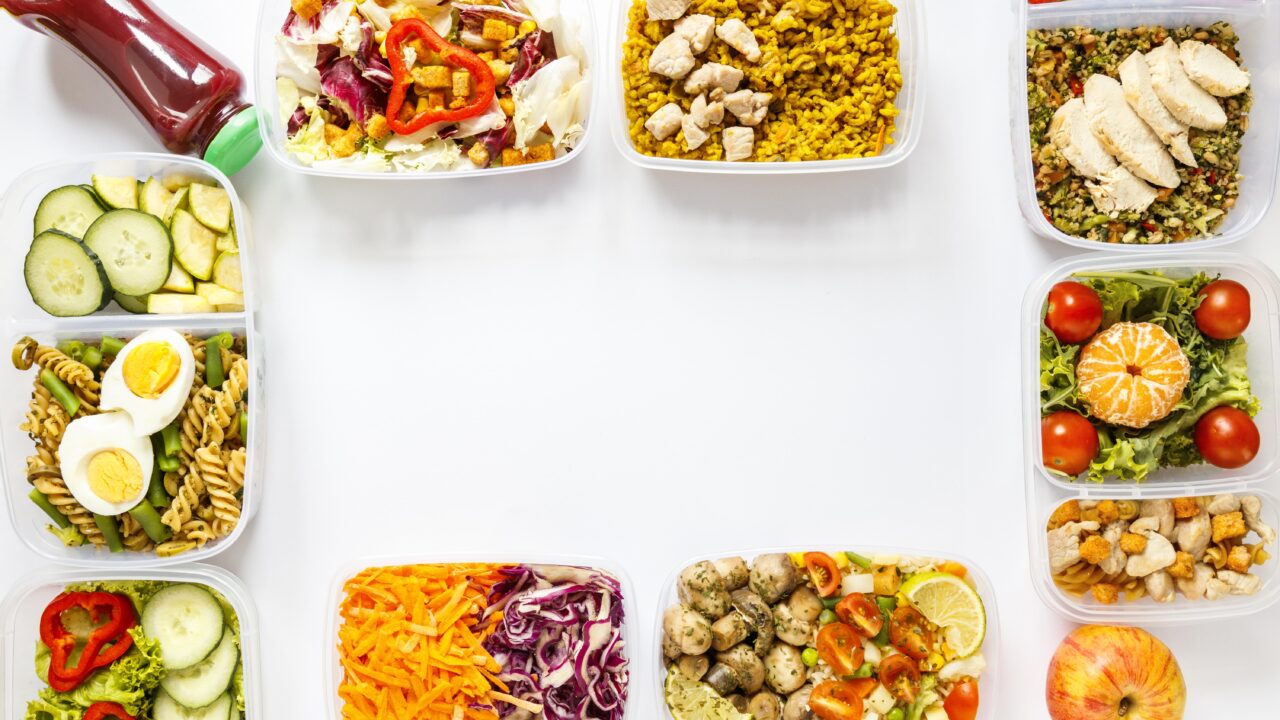
A 7-day high-protein meal prep plan works best as a batch-cook system, not a daily recipe list: pick two or three protein anchors, cook them once, and portion them using the USDA’s ounce-equivalent measure so every meal actually adds up. The catch is storage. Cooked protein only keeps safely in the fridge for 3 to 4 days, so the back half of the week needs a freezer plan built in from the start.
This is the same batch-cook logic behind this site’s high-protein meal prep pillar, applied to a full seven days instead of a single formula. The pieces below, how much protein counts as “enough,” how to cook it once, and how long each batch actually holds, are what turn a Sunday session into a week that doesn’t run out on Thursday.
How Much Protein Actually Counts
Individual protein needs vary with body weight and activity level, and this site doesn’t hand out a single gram target for every reader. What’s more useful for planning a week of cooking is the USDA’s protein foods group measure: the ounce-equivalent. Building each meal around two or three of these before you start cooking makes it easy to check, once the week is portioned out, whether a batch is genuinely high-protein or just high-effort.
| Protein food | 1 ounce-equivalent |
|---|---|
| Lean meat, poultry, or seafood | 1 ounce, cooked |
| Eggs | 1 egg |
| Beans, peas, or tofu | ¼ cup, cooked |
| Peanut butter | 1 tablespoon |
| Nuts or seeds | ½ ounce |
Source: MyPlate, Protein Foods Group, USDA. Verified 2026-09-22.
A lunch built on 3 to 4 ounce-equivalents of chicken thigh plus a scoop of beans is doing real work toward the week’s protein target; a lunch built on a single egg is not, no matter how the label reads. Use the table to sanity-check portions before you commit a whole Sunday to cooking them.
The Sunday Batch-Cook Session
Pick two or three protein anchors
Choose proteins that cook in the same window: chicken thighs, ground turkey, and a pot of lentils or black beans all finish within a similar stretch of time, which keeps the session to one cooking block instead of three.
10 minCook everything in the same window
Roast or pan-sear the meat while the beans or grains simmer, so nothing sits waiting once it’s done.
40 minCool before sealing containers
Spread hot food out to cool rather than sealing it straight into a stacked container. Trapped heat is what turns a good batch soggy and pushes it toward the edge of the safe storage window. Refrigerate within two hours of cooking.
20 minPortion by day, then split fridge and freezer
Set aside the first 3 to 4 days’ worth of containers for the fridge, and freeze the rest the same day you cook it rather than waiting until Wednesday to decide.
15 min
Why the Week Splits Into Two Batches, Not One
A single Sunday session can cook all seven days of protein at once. The mistake is storing all seven days in the fridge at once. USDA guidance puts cooked meat, poultry, and cooked beans or tofu at 3 to 4 days in the refrigerator, which is short of a full week by design, not by accident. Splitting the batch into a fridge portion and a freezer portion the same day you cook it is what makes a genuine 7-day plan work without a second cooking session midweek.
| What you cooked | Refrigerator | What to do with the rest |
|---|---|---|
| Cooked meat, poultry, or seafood | 3 to 4 days | Freeze the portions past day 4 the same day you cook |
| Cooked beans, lentils, or tofu | 3 to 4 days | Same window as meat; reheat to 165°F before eating |
Source: Cold Food Storage Chart, FoodSafety.gov / USDA-FSIS. Verified 2026-09-22. For the full chart across every food category, see this site’s storage chart.
What a Realistic Week Looks Like
Days 1 through 4 draw straight from the fridge batch. Rotate which protein anchor leads each meal, chicken one day, beans the next, so the same exact plate doesn’t repeat two days running, even though the cooking happened once. Move the frozen portion to the fridge to thaw the night before you plan to eat it, rather than reaching for a frozen block at lunchtime with no lead time. Days 5 through 7 then run on that thawed batch, often paired with whatever fresh vegetables are left in the fridge so the back half of the week doesn’t taste like a repeat of the front half.
Mistakes That Derail a 7-Day Protein Plan
- Cooking all seven days of protein and stacking it in one fridge container: it’s past the safe window before the week is half over.
- No freezer split, which forces a second, unplanned cooking session midweek anyway.
- Sealing hot food straight into a container, which traps steam and shortens how long the batch actually stays good.
- The same protein, same seasoning, every single day. Swapping the sauce or spice blend around the same two anchors keeps the week edible without adding a fourth thing to cook.
If breakfast and lunch are the two meals most likely to fall apart by Thursday, splitting a daily protein target across breakfast and lunch is worth building alongside this system rather than improvising it meal by meal.
Frequently asked questions
How much protein should a 7-day meal prep plan include?
Individual needs vary by body weight and activity level, so this site doesn’t publish a single daily gram target. What’s practical for planning is the USDA’s ounce-equivalent measure: 1 ounce of cooked meat, poultry, or seafood, one egg, or ¼ cup of cooked beans or tofu each count as one. Building each meal around two to three of these before you cook makes it easy to see whether a batch is genuinely high-protein once the week is portioned out.
Can I cook all seven days of protein in one Sunday session?
You can cook it in one session, but you shouldn’t store all of it in the fridge at once. USDA guidance puts cooked meat, poultry, and cooked beans or tofu at 3 to 4 days in the refrigerator, so portion out the first 3 to 4 days for the fridge and freeze the rest the same day you cook it.
What’s the safest way to reheat high-protein meal prep?
Reheat leftovers to an internal temperature of 165°F, and refrigerate freshly cooked batches within two hours of cooking rather than leaving them to cool on the counter.
How do I stop a 7-day protein plan from getting boring?
Rotate the sauce, seasoning blend, or cooking method around the same two or three protein anchors instead of introducing a whole new recipe every day. Same base, different flavor each time keeps the cooking simple while the week still tastes varied.


