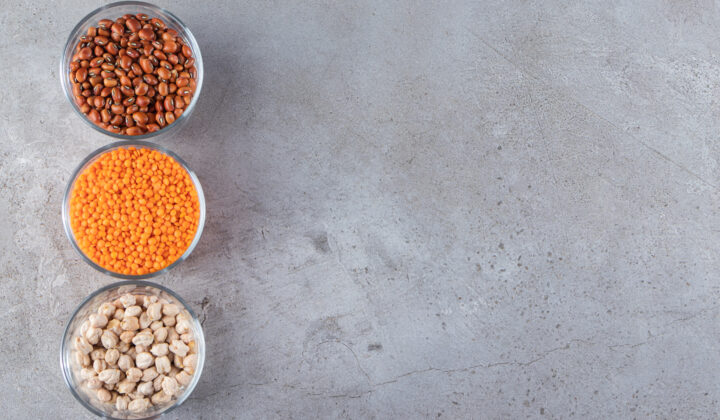
Search either term and the results split by diet before they split by anything else: all-plant recipes for vegan, recipes that allow eggs and dairy for vegetarian, twenty-something ideas either way. None of them show how the protein actually adds up. Tofu, lentils, and beans run lower per portion than chicken or beef, so a plant-based meal usually needs two anchors stacked together to land in the same range one animal protein covers alone. This page uses the same protein-per-portion approach as the complete high-protein meal prep system, rebuilt around plant foods, with a short list of egg and dairy anchors added on for the vegetarian half of the topic. Those same egg and bean anchors also wrap well cold in the high-protein breakfast burrito meal prep system.
Vegan anchors, protein per portion
These work whether the goal is strict vegan or just cutting back on meat a few days a week. Portions are for the cooked or ready-to-eat form, rounded from USDA FoodData Central.
| Food | Portion | Protein |
|---|---|---|
| Tofu, firm | 4 oz | ~11 g |
| Tempeh | 3 oz | ~17 g |
| Seitan | 3 oz | ~18 g |
| Edamame, shelled, cooked | 1 cup | ~18 g |
| Lentils, cooked | 1 cup | ~18 g |
| Chickpeas, cooked | 1 cup | ~15 g |
| Black beans, cooked | 1 cup | ~15 g |
| Quinoa, cooked | 1 cup | ~8 g |
| Peanut butter | 2 tbsp | ~7 g |
Rounded from USDA FoodData Central. Seitan and tempeh vary more by brand than whole foods do, check the label if you’re tracking closely.
Adding eggs and dairy for vegetarian meals
Vegetarian meal prep opens up three more anchors that vegan prep can’t use, and all three are worth knowing since they pack more protein per minute of prep than most plant options.
| Food | Portion | Protein |
|---|---|---|
| Eggs | 2 large | ~12 g |
| Cottage cheese | 1 cup | ~25 g |
| Plain Greek yogurt | 1 cup | ~23 g |
Same figures used elsewhere on this site, repeated here so this page works on its own without a second tab open.
The four-part formula, plant-based version

The same four moves that run the rest of this system, adjusted for how plant protein actually behaves in a container.
Pick one or two protein anchors
Plant sources run lower per portion than meat, so most of the combos below pair a legume with tofu, tempeh, or seitan rather than leaning on one alone.
Add a starch
Rice, farro, quinoa, or noodles, cooked once for the whole week the same way as the meat-based version of this system.
Add produce
Whatever roasts or steams in bulk without turning to mush by day three.
Batch and portion
Cook the week’s anchors and starch together, then split into containers by weight or by eye.
Six combos to build a week around

Four of these stay fully vegan. Two add eggs or dairy for anyone working from the vegetarian side of the topic, and both are marked. None are recipes with exact measurements, just the formula above filled in six different ways, landing between roughly 25 and 35 grams of protein per serving. For the storage side of these ingredients, see the plant-based storage guide.
| Protein anchor | Starch | Produce | Protein |
|---|---|---|---|
| Tempeh (4 oz) + edamame (1/2 cup), vegan | Brown rice | Roasted broccoli and carrots | ~32 g |
| Black beans (1 cup) + firm tofu (4 oz), vegan | Farro | Roasted zucchini and corn | ~26 g |
| Seitan (4 oz) + chickpeas (1/2 cup), vegan | Quinoa | Sauteed peppers and onions | ~31 g |
| Lentils (1.5 cups) + peanut sauce (2 tbsp), vegan | Rice noodles | Cucumber and shredded carrot | ~34 g |
| Chickpeas (1 cup) + 2 soft-scrambled eggs, vegetarian | Bulgur | Roasted cauliflower | ~27 g |
| Edamame (1 cup) + cottage cheese (1/2 cup), vegetarian | Soba noodles | Snap peas and sesame | ~31 g |
Swap the starch or vegetable for whatever’s cheapest that week; the anchor pairing is what keeps the protein count consistent.
Frequently asked questions
Do vegan and vegetarian meals need to combine proteins to be complete?
Not at every meal. Older advice paired specific plant foods, rice and beans, for example, at the same sitting to cover all the essential amino acids, but current nutrition guidance treats the day, not the plate, as the unit that matters, as long as the overall diet includes a variety of protein sources. Pairing two anchors in the combos above is about hitting a higher gram target in one container, not about completeness.
What’s the highest-protein vegan food on this list?
Tempeh and seitan, both around 17 to 18 grams per 3-ounce portion, close to a 3-ounce piece of chicken. Edamame and lentils come in next at about 18 grams per cooked cup.
Is seitan gluten-free?
No. Seitan is made from vital wheat gluten, so it’s one of the higher-protein anchors on this page but the wrong choice for anyone avoiding gluten. Tofu, tempeh (check the label, some blend in grains), lentils, chickpeas, and edamame are the gluten-free alternatives from the same table.
What’s the difference between the vegan and vegetarian combos on this page?
Vegan combos use only plant anchors: tofu, tempeh, seitan, legumes, and grains. Vegetarian combos add eggs, cottage cheese, or Greek yogurt on top of that same base. Both diets are covered on one page because the underlying system, and most of the anchors, overlap.
Can a high-protein vegan or vegetarian diet help with weight loss or muscle gain?
Protein tends to be filling per calorie, which is part of why high-protein eating patterns come up in both weight-management and muscle-building conversations. But actual weight or muscle change depends on total calories, training, sleep, and individual factors the current Dietary Guidelines don’t reduce to a single plant-based target. A doctor or registered dietitian can build a plan around your specific numbers; this page only covers the protein math.